We know The Black Stuff works — but how do we prove to growers that it will work for them? We commissioned an independent, controlled, replicated trial, designed and run by a government research centre, with the results put through formal statistics. That study — on sweet corn and Cavendish bananas at the Plant Protection Centre in Lao PDR — is the one to read if you want the facts that prove it just works.
Rigorous scientific trials
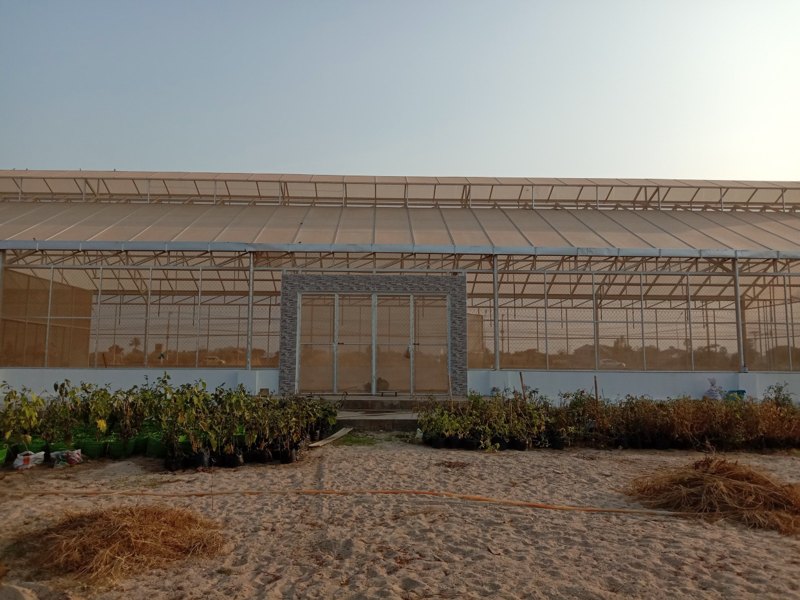
The trial ran in a glasshouse at the Plant Protection Centre in Ban Nahai, near Vientiane, from September 2019 to January 2020. It was designed as a scientific experiment, not a demonstration: a Completely Randomised Design, four treatments across four replications — sixteen units in all — with the data analysed by Analysis of Variance and Duncan’s Multiple Range Test at 95% confidence.
The four treatments of tissue-culture Cavendish banana seedlings and sweet corn: an untreated control, then The Black Stuff at one, two and three tonnes per hectare equivalents. Measurements were taken at 30, 60 and 90 days — leaf number, plant height, leaf length and width, stem circumference, and for the corn, cob length, circumference and weight.
The results
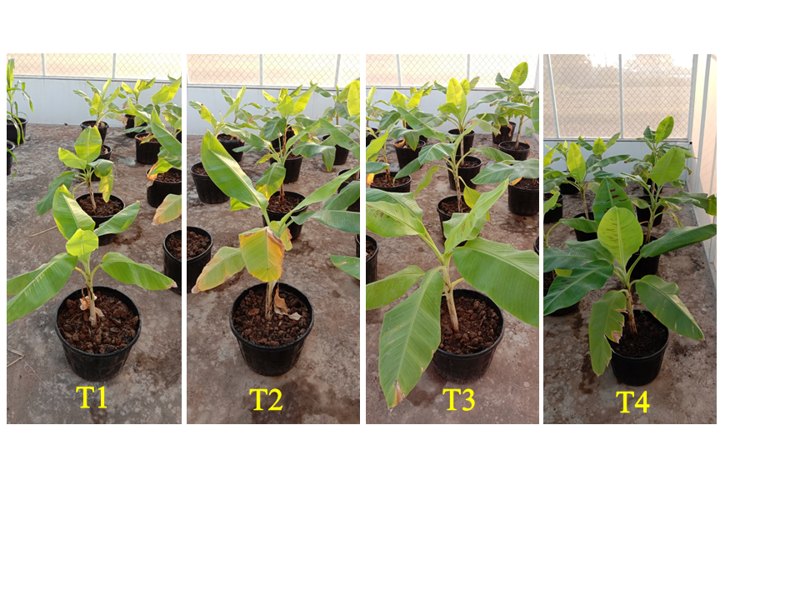
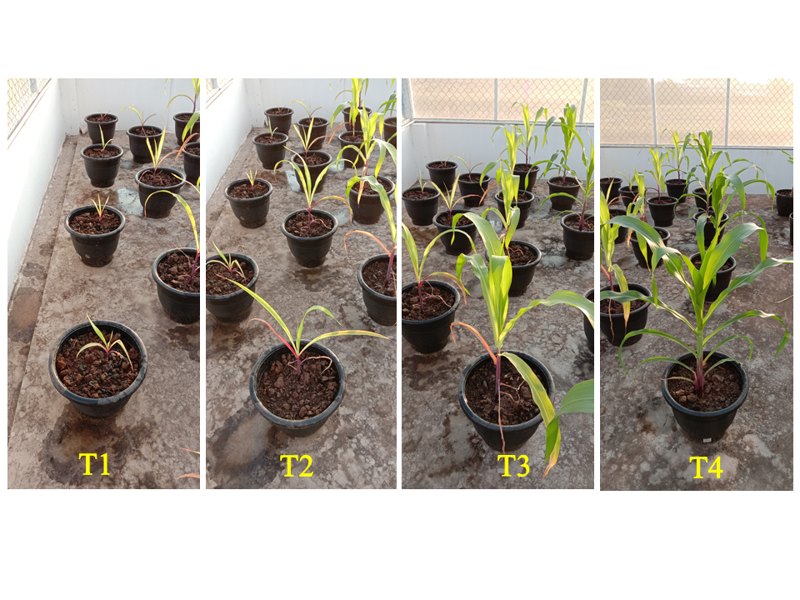
The clearest way to see the result is to watch the leaves. Over the trial the untreated banana plants went backwards — from 6.5 leaves at 30 days to 5.5 at 90, actually shedding foliage. The plants treated at three tonnes per hectare climbed the other way, from 8.75 leaves to a full 10, and the difference was statistically significant, not chance.
Sweet corn told the same story more sharply. The control sat still at four leaves across the whole period. At three tonnes per hectare the corn reached more than eleven; at two tonnes it was not far behind. On the statistics, the higher rates were clearly separated from the control — the response was real.
The untreated plants went backwards. The treated plants grew vigorously, clearly showing the 3 t/ha rate as the optimum application.
By the end, the best-treated plants were not marginally ahead; they were in a different class. At three tonnes per hectare the banana carried ten leaves and stood over a metre tall. The sweet corn reached more than eleven leaves and 1.34 metres, and carried a cob nearly 25 centimetres long weighing close to 115 grams.
A dose response, in black and white
What makes a trial like this valuable is not any single number but the shape of the whole thing. More product meant more growth, step by step, up to three tonnes per hectare — a clean dose response, under controlled conditions, confirmed by a research centre with no stake in the outcome. The Centre’s own conclusion was blunt: across leaf growth, height, leaf length, root length, cob length and cob weight, three tonnes per hectare produced the best plant growth.
Honest about what it shows
A glasshouse pot trial is not a paddock, and we don’t pretend it is. What it does, that a field demonstration cannot, is isolate the effect and prove it is real — with randomisation, replication and proper statistics. Read alongside The Black Stuff’s field trials, it points the same way from the other direction: the response holds up, and the optimum rate is three tonnes per hectare. For a grower weighing whether, and how much, to apply, that is about as solid as evidence gets.
When a government research centre measures the difference and the statistics agree, “it works” stops being a claim and becomes a result.
Trial: Plant Protection Centre, Department of Agriculture, Ministry of Agriculture & Forestry, Lao PDR — sweet corn and Cavendish banana, 01/09/2019 to 30/01/2020.
← Back to all writing